Experiencing oneness
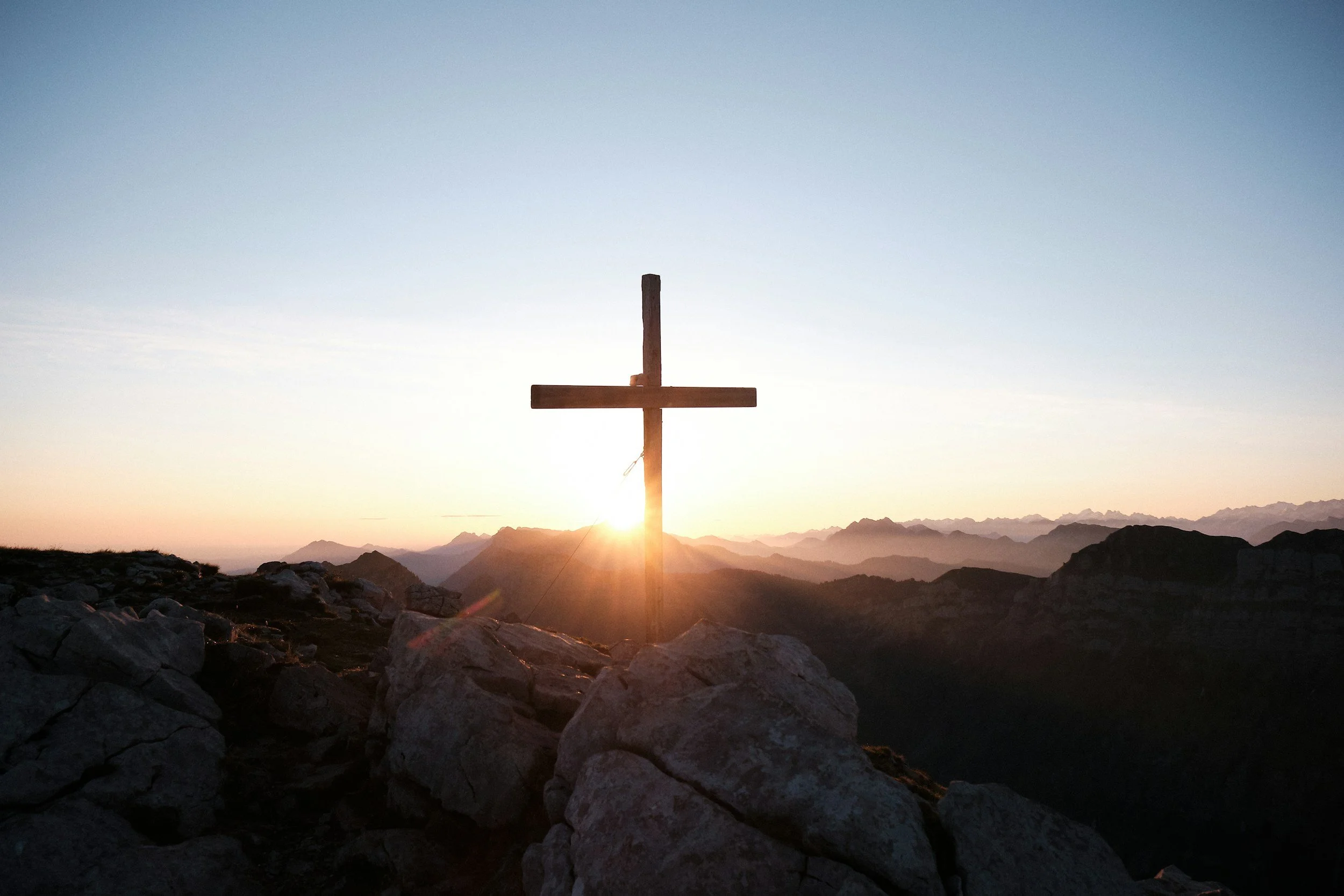
I pray not for these alone, but also for those who believe in me through their word, that they may all be one; even as you, Father, are in me, and I in you, that they also may be one in us; that the world may believe that you sent me. - Gospel of John 17:20–21
When the Christian church is at its best, there is oneness. That unmistakable sense that wherever you go, you are part of a family. You belong.
And yet, in more than 2,000 years of history, our faith has not produced the unity Jesus prayed for.
Driving down the closest major street to my house from the tollway, it’s almost comical how many churches there are—each with a different name, different emphasis, different doctrinal statement. All sincere. All rooted in Christ. And yet clearly not one.
It makes me wonder if we’ve missed something.
What if the unity Jesus asked his Father for wasn’t something to be organized, agreed upon, or legislated? What if it were something else entirely?
Unity that can’t be argued into existence
The church has tried many paths to unity: councils, creeds, reforms, movements. We’ve refined language. Clarified doctrine. Drawn lines to protect truth.
And yet division persists.
Perhaps because unity isn’t something we think our way into.
Perhaps because agreement alone doesn’t dissolve separation.
Jesus didn’t pray that his followers would all think the same things. He prayed that they would be one—in the same way that he and the Father are one. That’s not organizational unity. That’s indwelling.
Which raises a different question:
What if the barrier to oneness isn’t doctrinal disagreement, but something internal?
The subtle system and the experience of separation
Sahaja Yoga describes a subtle system within the human body—an inner system that governs attention, balance, and spiritual awareness. While the language may be unfamiliar, the experience it points to is not.
In this framework, separation isn’t just a social or theological problem. It’s something we live inside.
Two forces in particular pull us away from oneness:
Conditioning — the accumulation of past experience, identity, and emotional memory
Ego — the forward-driving sense of “I,” “mine,” and “my way”
Together, these two forces dominate our attention. They shape how we see ourselves, how we see others, and how we defend what we believe.
Even when we share faith, language, and scripture, ego and conditioning keep us separate.
The Agnya chakra: the narrow gate
In Sahaja Yoga, this tension is located at the Agnya chakra, the center associated with forgiveness, humility, and surrender.
This is the place where separation lives.
As long as ego and conditioning dominate here, unity remains impossible—not just between denominations, but between people. We may worship together, but we don’t experience oneness.
And it’s no accident that Jesus placed forgiveness at the center of his teaching.
“Father, forgive them.”
“Forgive seventy times seven.”
“If you do not forgive others, neither will your Father forgive you.”
Forgiveness isn’t presented as morality. It’s presented as a gateway.
Jesus and Mary: the way beyond ego and conditioning
In Sahaja Yoga, Jesus and Mary are understood as central to the opening of the Agnya chakra.
Jesus embodies complete forgiveness where ego dissolves entirely into obedience and love. Mary embodies purity, humility, and surrender where conditionings are released without resistance.
Together, they represent the way beyond separation.
This isn’t about adding something to Christianity. It’s about seeing why forgiveness sits at the heart of it.
As long as we cling to being right, to protecting identity, to defending past wounds, oneness stays out of reach. Not because we lack faith, but because we haven’t passed through the narrow gate.
Letting go: forgiveness as lived release
Forgiveness, in this sense, isn’t effortful. It isn’t something we force or perform.
It’s something that happens when we let go. Ego loosens its grip. Conditioning stops replaying the past.
In Sahaja Yoga, forgiveness isn’t a command—it’s a posture. And when it happens, something remarkable follows.
The sense of “other” diminishes.
Comparison falls away.
Belonging emerges without effort.
Oneness, then, isn’t something we build. It’s what remains when the obstacles of ego and conditioning fall away.
And perhaps that’s what we’ve been missing all along.
An unexpected experience of oneness in a Sahaja Yoga meditation class
I was still pretty new in my Sahaja Yoga meditation journey when I suddenly felt overwhelmed by some of the elements that still felt foreign to me. Old training surfaced. Questions I thought I had set aside came rushing back.
I sent an email to the man who led an online class I attended trying to name the tension between everything I had been taught and the feeling that I was stepping off-road without a map.
That evening in class, Anupam said, “Cathy, I got your email. I don’t actually know that much about Christianity, but Irene does. Would you like to ask your question to Irene?”
What followed was one of the most beautiful conversations of my life. It was between:
A Hindu.
A Muslim.
A Protestant.
And a Catholic.
No discussion of doctrine. No debate. What followed was each of us sharing about seeking God. About how that desire had been present in each of us since childhood, and how it had quietly shaped our entire lives.
What struck me most was how much was the same. The same searching. The same questions about the faiths we’d grown up in. The same strong pull toward the God who loved us.
In that moment, oneness wasn’t an idea or an aspiration. It was simply there.
That experience felt so much like what Jesus had prayed for, that I made a decision to be all in. I wouldn’t get in my head about how everything fit together.
And it continues.
I can’t tell you how many times since then, I’ve been with a group of Sahaja Yogis who were all from different countries and religious traditions where the sense of oneness was just there. It’s truly one of the most beautiful things I’ve ever been part of.